ORIGINAL ARTICLE
BELIEFS AND PRACTICES OF BRAZILIAN NURSES REGARDING THE INCLUSION OF THE FAMILY IN NURSING CARE
CRENÇAS E PRÁTICAS DE ENFERMEIROS BRASILEIROS SOBRE A INCLUSÃO DA FAMÍLIA NO CUIDADO DE ENFERMAGEM
CREENCIAS Y PRÁCTICAS DE ENFERMEROS BRASILEÑOS SOBRE LA INCLUSIÓN FAMILIAR EN EL CUIDADO DE ENFERMERÍA
https://doi.org/10.31011/reaid-2026-v.100-n.3-art.2696
1Sueli Aparecida Frari Galera
2Alini de Oliveira Reis-Fogatti
3Aila
Cristina Nobokuni
4Bianca Cristina Ciccone Giacon-Arruda
5Carolina Guidorrizzi Zanetti
6Sonia Regina Zerbetto
7Julia Gonçalves Bertolino
1Universidade de São Paulo (USP), Escola de Enfermagem de Ribeirão
Preto (EERP). Ribeirão Preto, SP - Brasil. ORCID: 0000-0001-7974-9214
2Universidade de São Paulo (USP), Escola de
Enfermagem de Ribeirão Preto (EERP). Ribeirão Preto, SP - Brasil. ORCID: 0009-0002-2604-0927
3Universidade de São Paulo (USP), Escola de Enfermagem de Ribeirão
Preto (EERP). Ribeirão Preto, SP - Brasil. ORCID: 0009-0003-6173-3144
4Universidade Federal de Mato Grosso do Sul (UFMS), Instituto
Integrado de Saúde (INISA). Campo Grande, MS – Brasil. ORCID: 0000-0002-8433-6008
5Universidade de São Paulo (USP), Escola de Enfermagem de Ribeirão Preto (EERP). Ribeirão Preto, SP - Brasil. ORCID: 0000-0003-0011-4510
6Universidade Federal de São Carlos (UFSCar). São Carlos, SP - Brasil. ORCID: 0000-0002-2522-1948
7Universidade de São Paulo (USP), Escola de Enfermagem de Ribeirão Preto (EERP). Ribeirão Preto, SP - Brasil. ORCID: 0009-0007-0861-8699
Corresponding Author
Aila Cristina Nobokuni
Av. Bandeirantes, 3900, Ribeirão Preto, SP, Brazil. CEP: 14049-900, Phone: +55 (16) 98191-5286 - E-mail: aila.nobokuni@usp.br
Submission: 26-11-2025
Approval: 24-06-2026
ABSTRACT
Introduction: Nursing is the profession that most comprehensively cares for families; however, many factors influence the professional practice of including the family in nursing care. Objective: To describe the beliefs and practices of Brazilian nurses regarding the inclusion of the family in nursing care. Method: A qualitative study based on content analysis, conducted using questionnaires filled out by nurses who work with families. Three questions from the Family Nursing Practice Scale were analyzed. Results: The study revealed three main categories: (1) Family and professionals as barriers to inclusion in care, (2) The benefits of including the family in care, and (3) The intervention of professionals to involve the family in care. The findings indicated that although nurses recognize the importance of involving the family, their practice remains focused on prescriptive guidance, with little attention to family needs. A lack of knowledge of theoretical models and a linear view of communication hinder the adoption of a more holistic and collaborative approach. Conclusion: The study suggests implementing tools such as the 15-minute interview and the Calgary Models of Family Assessment and Intervention to improve care, promote circular communication, and strengthen family involvement in nursing care.
Keywords: Family; Nursing Care; Family Nursing.
RESUMO
Introdução: A enfermagem é a profissão que mais atende famílias em sua totalidade, porém muitos fatores influenciam na prática profissional de incluir a família durante o cuidado de enfermagem. Objetivo: Descrever as crenças e as práticas de enfermeiros brasileiros sobre a inclusão da família no cuidado de enfermagem. Método: Estudo do tipo qualitativo baseado na análise de conteúdo realizado com formulários preenchidos por enfermeiros que trabalham com famílias. Foram analisadas três perguntas do instrumento Family Nursing Practice Scale. Resultados: O estudo revelou três categorias principais: (1) A família e o profissional como barreiras na inclusão do cuidado, (2) Os benefícios da inclusão da família no cuidado e (3) A intervenção de profissionais para envolver a família no cuidado. Os resultados indicaram que, embora os enfermeiros reconheçam a importância de envolver a família, a prática permanece centrada em orientações prescritivas, com pouca atenção às necessidades familiares. A falta de conhecimento em modelos teóricos e a visão linear da comunicação dificultam a adoção de uma abordagem mais holística e colaborativa. Conclusão: O estudo sugere a implementação de ferramentas como a entrevista de 15 minutos e os modelos Calgary de Avaliação e Intervenção Familiar para aprimorar a assistência, promover a comunicação circular e fortalecer o envolvimento familiar no cuidado de enfermagem.
Palavras-chave: Família; Cuidado de Enfermagem; Enfermagem Familiar.
RESUMEN
Introducción: La enfermería es la profesión que más atiende a las familias en su totalidad; sin embargo, muchos factores influyen en la práctica profesional de incluir a la familia durante el cuidado de enfermería Objetivo: Describir las creencias y prácticas de enfermeros brasileños sobre la inclusión de la familia en el cuidado de enfermería. Método: Estudio cualitativo basado en análisis de contenido, realizado a partir de formularios completados por enfermeros que trabajan con familias. Se analizaron tres preguntas del instrumento Family Nursing Practice Scale. Resultados: El estudio reveló tres categorías principales: (1) La familia y los profesionales como barreras para la inclusión en el cuidado, (2) Los beneficios de incluir a la familia en el cuidado, y (3) La intervención de los profesionales para involucrar a la familia en el cuidado. Los resultados indicaron que, aunque los enfermeros reconocen la importancia de involucrar a la familia, la práctica sigue centrada en orientaciones prescriptivas, con poca atención a las necesidades familiares. La falta de conocimiento de modelos teóricos y una visión lineal de la comunicación dificultan la adopción de un enfoque más holístico y colaborativo. Conclusión: El estudio sugiere la implementación de herramientas como la entrevista de 15 minutos y los Modelos Calgary de Evaluación e Intervención Familiar para mejorar la atención, promover la comunicación circular y fortalecer la participación familiar en el cuidado de enfermería.
Palabras clave: Familia; Cuidado de Enfermería; Enfermería Familiar.
INTRODUCTION
Family nursing, grounded in general systems theory, understands that the illness or vulnerability of an individual affects all family members. Similarly, family interactions can influence the strategies used for the care and health promotion of this group. Recognizing this dynamic of interdependence leads nurses to rethink their practice, shifting the focus from the individual patient to considering the family as a unit of care (1-2).
In the context of family systems nursing, beliefs are understood as assumptions that nurses hold about the importance and impact of family participation in care; these beliefs directly influence how they perceive, value, and act with the family as an integral part of care (2-4). The belief model about illness reinforces this view by considering that the beliefs shared by patients, families, and healthcare professionals are central to promoting the healing process and family intervention. Thus, believing that involving the family in planning contributes to better outcomes becomes fundamental for a favorable attitude and practical behavior that actively seeks this integration (2-4).
The close relationship and cooperation between family and healthcare services alleviates the suffering experienced by the individual and their family and, consequently, contributes to the cure, improvement, or stabilization of the presented health condition. This closer relationship between client-family and healthcare professionals stems from professional action based on more humanized techniques to provide important and assertive information in care (5-8).
Despite the benefits, the practice of including the family in healthcare and healthcare provision is still under development in the daily work routine of professionals in different healthcare services. This assessment extends to care provided both in Brazil and in other countries (9-10).
The literature indicates that nurses' beliefs about the benefits of family participation in care can act as both an obstacle and an incentive for the application of knowledge in practice. When professionals show disbelief or lack of attitudes geared towards family inclusion, they tend not to develop family-oriented care, failing to recognize its advantages. Therefore, investigating nurses' beliefs and attitudes about family nursing becomes essential for the advancement of professional practice and for the promotion of the health of patients and families (4,7,11).
In this context, the present study aimed to describe the beliefs and practices of Brazilian nurses regarding the inclusion of the family in nursing care.
METHODS
To ensure methodological rigor, the results were described according to the items proposed by the Consolidated Criteria for Reporting Qualitative Research (COREQ).
This study was developed using a qualitative approach with secondary data from two initial studies that investigated nurses' attitudes and practices regarding family inclusion using the Family Nursing Practice Scale (FNPS) in two distinct care settings (7,9). The authors of both studies authorized the use of their data. In Nobokuni's study (7), data collection was carried out online with 70 mental health nurses working in different Brazilian states, including São Paulo, Minas Gerais, Mato Grosso, Goiás, Paraná, Bahia, Rio de Janeiro, Espírito Santo, Sergipe, Distrito Federal, Rio Grande do Sul, Ceará, and Mato Grosso do Sul. of the state of São Paulo, through manual completion of the instrument that was available in the professionals' work units and subsequently collected.
The FNPS is based on the Family Systems Nursing theory, which considers the interaction, reciprocity, and relationships between multiple systems; that is, between the illness, the patient and their family, and the broader systems in which they are embedded, including the health system. The FNPS, developed in English (12), was translated and adapted into Brazilian Portuguese (9). This instrument aims to assess the nurse's attitude and practice regarding the inclusion of the family in nursing care planning. It understands that attitudes are determined by individual beliefs and can guide nurses' behaviors (4,7,11). It consists of 13 questions, 10 of which are closed-ended, Likert-type, and three open-ended questions that allow nurses to reflect on their professional practice. In this investigation, the responses to the three open-ended questions, which had not been analyzed in depth in the primary studies, were analyzed. The analyzes were conducted from the perspective of the theoretical framework of systemic family nursing (2) and the methodological framework of content analysis (13).
The data collected for this study comes from two surveys conducted with nurses from different contexts: 144 nurses from the hospital setting and 70 mental health nurses from different states, totaling 214 forms. The information collected from these forms includes: nurses' work characteristics and the three responses to the open-ended questions of the FNPS instrument. Only forms containing all three answers to the open-ended questions of the instrument were selected.
All forms were read in full by three researchers in a private and isolated environment at a university between March and May 2022. The nurses' responses were transferred to a new notepad file for the construction of the textual corpus used in the analysis. The researchers were trained in data extraction.
Sociodemographic data were not collected because not all forms had been fully completed. The three open-ended questions proposed in the FNPS scale are: What problems or inconveniences do you encounter in your nursing practice when involving the family in the assessment and planning of care?; What are the benefits, if any, of including the family in your nursing practice?; and What did you do last week to involve families in your current nursing practice? Please comment.
To guide the data analysis process, the IRAMUTEQ software (Interface de R pour les Analyzes Multidimensionnelles de Textes et de Questionnaires) was used. The advantages of using this resource are that it assists in organizing and separating the data into related categories and facilitates the location of the text segments that make up each category. The use of the software favors speed in coding, maintaining similar effectiveness to the manual process(14).
To proceed with the analysis using the IRAMUTEQ software, the answers to the three questions were aggregated into a single text, building a corpus. The software organizes the words of the textual corpus according to their similarity, creating groups of words that are articulated in the different passages that make up the textual corpus. From the generated groupings, the passages related to each group were identified. Next, we reflected, from the perspective of family systems nursing, on how these excerpts described the nurse's self-perception regarding their attitudes and practices in including the family in nursing care planning and how this inclusion was carried out.
This study was approved by the Research Ethics Committee with Human Beings under opinion number 4.153.234 and protocol CAAE: 16413119.7.0000.5393.
RESULTS
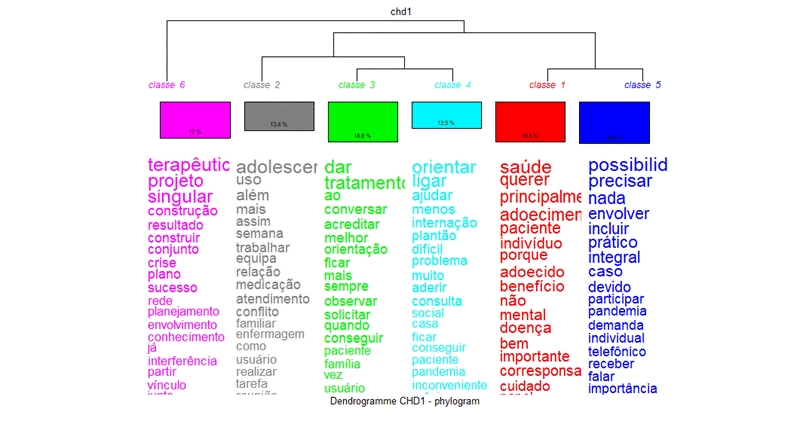
Based on the analysis conducted by the software, a dendrogram was obtained that allows visualization of the words with the highest incidence in each category. This result is represented in Figure 1.
Figure 1 – Dendrogram
DISCUSSION
After the content analysis process, three main categories emerged: (1) The family and the professional as barriers to inclusion in care; (2) The benefits of including the family in care; and (3) Professional intervention to involve the family in care.
These categories describe a practice that conflicts with the belief about the importance of including families in nursing care. The nurses participating in the study highlight that it is important to include the family, but the practice described still preserves a prescriptive attitude, that is, the nurse determines what the family should do. The following are excerpts that exemplify the results.
Classes 1 and 4 – The family and the professional as barriers to inclusion in care
Classes 1 and 4 describe two types of barriers to family inclusion. The first barrier is the lack of knowledge of a theoretical model for family assessment and intervention that allows understanding the family as a unit of care. Another barrier, associated with this lack of knowledge, is the belief that the family should follow the nurse's prescription without question. As a result, there is a negative view among professionals regarding family involvement and a resistance to including them in care.
[...] Often, family members negatively influence treatment due to their lack of knowledge. Here in the shared accommodation, most of the time, the family gets in the way. (F.4)
[...] Low family understanding; Resistance from family members; Continuity of the process during hospitalizations. (F.10)
[...] We often encounter family resistance, resistance to treatment adherence, and especially a lack of information from the family about the illness. (F.50)
[...] Often, the beliefs and what the family believes is best for their child conflict with what the clinic plans. In addition to the family's difficulty in coping with the illness. (F.84)
[...] The lack of information among families at the beginning of treatment is a factor that directly impacts the construction of the therapeutic plan. Often, the limited knowledge and the different beliefs that families have about patients and disorders make it very difficult at the beginning of treatment. (F.102)
Classes 2 and 3 – The benefits of including the family in care
Classes 2 and 3 demonstrate the benefits of involving the family in care and the positive view of professionals regarding this involvement when it occurs. In these classes, it is possible to observe the professional's role in bringing the family closer to care, believing in the positive impact this action can have on the treatment of the ill individual.
[...] When you involve the family, they can transmit confidence to the patient and often become an ally to the patient, bringing comfort and affection at such a necessary time. (F.30)
[...] The greatest benefit, in my view, is the trust that is established when there is involvement from both parties, facilitating the care process. (F.72)
[...] The patient feels safer, there is greater adherence, the family is more at ease for discharge. There is greater confidence in the team. (F.95)
[...] Family participation is fundamental; we can get to know the members, the dynamics, make them co-responsible for the care, and make them believe in our work. (F.134)
Class 5 – Professionals' actions to involve the family in care
In class 5, nurses described actions they took with families to maintain patient care. This class demonstrates the professionals' concern in guiding family members on how to care for the sick person.
[...] Involving the father and husband in the care and guidance of the client regarding the postpartum period and care of the newborn. (F.3)
[...] Instructions regarding the disposal of an indwelling urinary catheter at home; insulin administration; assistance during bed baths and chair baths; guidance on the use of a nasoenteric tube; emotional support. (F.13)
[...] During the pandemic, we made phone calls, got involved in the administration and care of medications, reinforced participation in consultations, and suggested activities for patients at home. (F.9)
[...] I spoke with a patient's mother, called requesting the family's presence at the service, and provided guidance on medication. (F.164)
[...] I provided guidance, called families, and conducted nursing consultations regarding medication changes. (F.170)
[...] I called a mother. (F.39)
DISCUSSION
The study highlighted the beliefs and practices of nurses working in different care settings regarding the inclusion of the family in nursing care. The professionals believe that the family is important for the care of its members and functions as an essential link between the healthcare team responsible for prescribing care and the family member who will receive the care. The family is responsible for ensuring that the prescribed care is followed and, in this way, achieving success in treatment. In this sense, the nurse's main practice in relation to the family is care guidance. When the family adheres poorly to the guidelines or asks many questions, it is considered a barrier to care.
Family guidance is an essential component of inclusion in nursing care, as it promotes health education, empowers caregivers, and ensures continuity of care beyond the hospital environment. Training family members through structured guidance improves adherence to treatment, reduces complications, and contributes to patient safety. Furthermore, effective communication between nurses and family members promotes shared decision-making and the development of coping strategies, minimizing the emotional impact of illness. Thus, guidance not only strengthens the family's role in care but also improves the quality of care provided (15).
Although the participants in this study value family participation in the care of the sick family member, there is a perceived lack of knowledge of a theoretical model for family assessment and intervention that allows understanding the family as a unit of care. Study participants believe that families are positive for the patient and their recovery, and that once the family caregiver accepts and understands the nurse's guidance, the sick member will have a better overall treatment and prognosis. As a consequence of this belief, the nurse's practice is centered on guiding prescribed care. Studies have pointed out that this view can limit the inclusion of the family as a unit of care, as the nurse-family relationship is restricted to the care of the patient, not enabling a space where the feelings and doubts of the group as a whole are addressed (3-16).
Like other research that investigated nurses' attitudes about family inclusion in care, the findings of this study indicate that nurses' beliefs directly influence their attitudes and practices in nursing care. Professionals who recognize the relevance of family participation tend to develop more integrated care strategies, promoting greater family engagement and better patient outcomes. On the other hand, a lack of belief in the importance of the family can result in practices focused exclusively on the individual patient, limiting the potential for family support and the effectiveness of interventions. This pattern reinforces the need for continuing education and professional development programs that strengthen the understanding of the family as a unit of care, a central element of family nursing (4,9,11,17-20).
Family nursing recognizes that a health problem affects the entire family; reciprocally, family relationships can contribute to ways of managing family health in all care contexts (2). One point we emphasize is that participants did not realize how much the dynamics of interactions between family members impact adherence or non-adherence to prescribed care. Therefore, communication between the nurse and the family becomes linear; that is, the nurse provides guidance on care, but does not create an environment where the family has the opportunity to discuss their needs in order to implement the guidance given.
From the perspective of circular communication between nurses and families, this is a fundamental element for promoting holistic and collaborative care. Circular communication enables a direct exchange of information between the nurse and the patient's family, allowing messages to be interpreted and adjusted according to the participants' responses. This process facilitates the construction of a therapeutic bond, strengthens trust, and broadens the understanding of family dynamics that impact health care (21-23). The nurses participating in this research perceived several barriers that hinder the inclusion of the family in care. Among them, cultural, emotional, and structural factors of the health service stand out, in addition to personal beliefs and different educational levels within the health environment. Furthermore, lack of time, high care demands, and lack of a suitable environment are seen as additional obstacles for the nurse to include the family in their work and to apply circular communication.
Thus, the nurse recognizes that there are many barriers to this work with families and that it is necessary to establish effective ways to work with families, considering the benefits of doing so. Therefore, it becomes essential that nurses develop communication skills and use strategies that facilitate family engagement, ensuring more effective care centered on the needs of the patient and their family group as a whole (4,16,22,24-25).
One viable tool for nurses working with families would be the 15-minute interview. It uses five essential elements to strengthen the relationship between the professional, the patient, and their family: the use of therapeutic questions, which stimulate reflection and dialogue; qualified listening, which promotes empathy and acceptance; recognition of family strengths and resources; promotion of change through small strategic interventions; and valuing limited time, optimizing interaction to achieve significant results in a short period. These elements help in creating bonds and co-responsibility for care (4-24). Furthermore, nurses can intervene more effectively, helping families overcome communication barriers and develop stronger mutual support, essential for patient recovery and the well-being of the group as a whole (15-23). Knowing a family assessment and intervention model is fundamental for more complete and effective nursing care. An individual's health is deeply interconnected with their family context, which can both favor and hinder recovery and well-being. Structured models, such as the Calgary Family Assessment Model (CFAM) and the Calgary Family Intervention Model (CFIM), offer tools to understand family dynamics, identify support networks, conflicts, communication patterns, and risk factors that can impact treatment (2-11).
By applying these models, nurses can plan more precise and individualized interventions, promoting an environment conducive to the patient's health and strengthening family involvement in care. In addition, a systemic approach allows for improved communication among family members, reduced stress generated by illness, and encouragement of self-care practices. Thus, nursing shifts its focus from solely focusing on the individual to considering the family as an active element in the health and illness process, contributing to more humanized, effective, and comprehensive care (2-26).
Limitations of the study include the fact that including results from two research studies to analyze nurses' beliefs and practices allowed for a more significant number of data points. However, the sample was more concentrated among nurses from a specific hospital setting, which may have influenced the predominance of beliefs and practices.
FINAL CONSIDERATIONS
The results of this study showed that nurses recognize the role of the family in the healthcare of its members and consider it an essential link between the patient and the healthcare team. They therefore believe that the family should be included in the context of nursing care.
On the other hand, the practice of these professionals is centered on guidance about the care that the family should adopt, without much attention to the family's needs to understand and cope with the health of its members. This view may limit the inclusion of the family as a unit of care, since the nurse-family relationship is restricted to the care of the patient, not enabling a space where the feelings and doubts of the group as a whole can be addressed.
Nurses identified structural barriers related to the work context and barriers related to knowledge about how to approach families. These barriers need to be overcome so that families are effectively included in care. These results can contribute to the development of educational programs or interventions that adapt the nursing care offered to families.
REFERENCES
1. Fonseca SA, Silveira AO, Franzoi MAH, Motta E. Cuidado centrado na família na unidade de terapia intensiva neonatal (UTIN): experiências de enfermeiras. Enfermería Cuidados Humanizados [Internet]. 2020;9(2):170–90. https://doi.org/10.22235/ech.v9i2.1908
2. Wright LM, Leahey M. Enfermeiras e famílias: guia para avaliação e intervenção na família. 5ª ed. São Paulo: Roca; 2012
3. Macedo MRC, Santos VEP, Melo JCA, Lima MEAS, Bispo MM, Saraiva COPO. Barreiras e facilitadores para comunicação efetiva entre profissionais de enfermagem e pacientes: scoping review. Adv. Nurs. Health [Internet]. 2024;6(1):1-14. https://doi.org/10.5433/anh.2024v6.id47858
4. Bell JM, Wright LM. The Illness Beliefs Model. J Fam Nurs [Internet]. 2015;21(2):179-85. https://doi.org/10.1177/1074840715586889
5. Kappel VB, Goulart BF, Pereira AR, Chaves LDP, Iwamoto HH, Barbosa MH. Professional-family communication in a children’s psychosocial care center: practicalities and difficulties. Texto Contexto Enferm [Internet]. 2019;29. https://doi.org/10.1590/1980-265x-tce-2019-0025
6. Swan MA, Eggenberger SK. Early career nurses’ experiences of providing family nursing care: perceived benefits and challenges. J Fam Nurs [Internet]. 2020;27(1):23-33. doi: http://dx.doi.org/10.1177/1074840720968286
7. Nobokuni AC. Fatores que influenciam as atitudes e práticas de enfermeiros em relação à inclusão da família no cuidado de enfermagem em saúde mental [dissertação]. Ribeirão Preto: Escola de Enfermagem de Ribeirão Preto, Universidade de São Paulo; 2021. doi:10.11606/D.22.2021.tde-22032022-150804
8. Correia AFV. Benefícios da visita de familiares à pessoa em situação crítica [dissertação]. Lisboa (PT): Universidade Católica Portuguesa; 2021. Disponível em: https://www.proquest.com/dissertations-theses/benefícios-da-visita-de-familiares-à-pessoa-em/docview/3110415602/se-2
9. Rodrigues WD, Badagnan HF, Nobokuni AC, Fendrich L, Zanetti AC, Giacon BC, et al. Family Nursing Practice Scale: Portuguese language translation, cross-cultural adaptation, and validation. J Fam Nurs [Internet]. 2021;27(3):212–21. https://doi.org/10.1177/10748407211002152
10. Yoo HJ, Lim OB, Shim JL. Critical care nurses’ communication experiences with patients and families in an intensive care unit: A qualitative study. PLOS ONE [Internet]. 2020;15(7):e0235694. https://doi.org/10.1371/journal.pone.0235694
11. Cranley LA, Lam SC, Brennenstuhl S, Kabir ZN, Boström AM, Leung AY, et al. Nurses’ attitudes toward the importance of families in nursing care: a multinational comparative study. J Fam Nurs [Internet]. 2021:1074840721104238. https://doi.org/10.1177/10748407211042338
12. Simpson P, Tarrant M. Development of the Family Nursing Practice Scale. J Fam Nurs [Internet]. 2006;12(4):413-25. https://doi.org/10.1177/1074840706290806
13. Palmeira LL, Cordeiro CP, Prado EC. A análise de conteúdo e sua importância como instrumento de interpretação dos dados qualitativos nas pesquisas educacionais. Cad Pos Grad [Internet]. 2020;19(1):14-31. https://doi.org/10.5585/cpg.v19n1.17159
14. Souza MAR, Wall ML, Thuler AC de MC, Lowen IMV, Peres AM. O uso do software IRAMUTEQ na análise de dados em pesquisas qualitativas. Rev Esc Enferm USP [Internet]. 2018;52(0). https://doi.org/10.1590/S1980-220X2017015003353
15. Oliveira LG, Fracolli LA, Gryschek AL, Pina-Oliveira AA, Campos DS, Silva LA, et al. A família como sujeito: a centralidade do cuidado e do conhecimento na orientação familiar em saúde. Rev JRG Estud Acad [Internet]. 2024;7(14):e14989. https://doi.org/10.55892/jrg.v7i14.989
16. Frade J, Henriques C, Frade M. A integração da família nos cuidados de enfermagem: perspetiva de enfermeiros e estudantes de enfermagem. Rev Enferm Ref [Internet]. 2021;7. https://doi.org/10.12707/rv20158
17. Sampaio AD, Spagnolo LM, Schwartz E, Lise F, Neves JD, Kickhofel MA. Características laborais e atitudes de enfermeiros no cuidado às famílias na atenção primária à saúde. Rev Enferm UFSM [Internet]. 2022; 12(1):e8. https://doi.org/10.5902/2179769267045
18. Ferreira M, Kraus T. Fatores associados às atitudes dos enfermeiros quanto à importância da família nos cuidados de enfermagem. Rev Enferm Ref [Internet]. 2023;VI Série(2):0. https://doi.org/10.12707/rvi22058
19. Duhamel F, Dupuis F, Turcotte A, Martinez AM, Goudreau J. Integrating the illness beliefs model in clinical practice. J Fam Nurs [Internet]. 2 abr 2015 [citado 22 ago 2025];21(2):322-48. https://doi.org/10.1177/1074840715579404
20. Kiwanuka F, Nanyonga RC, Sak‐dankosky N, Kvist T. Influence of perceived benefits, barriers and activities of family engagement in care on family nursing practice: a cross-sectional correlational study. J Adv Nurs [Internet]. 2023;79(9):3487–97. http://dx.doi.org/10.1111/jan.15677
21. Macedo MRC, Santos VEP, Melo JCA, Lima MEAS, Bispo MM, Saraiva COPO. Barreiras e facilitadores para comunicação efetiva entre profissionais de enfermagem e pacientes: scoping review. Adv Nurs Health [Internet]. 2024;6(1):1-14. https://doi.org/10.5433/anh.2024v6.id47858
22. Sodré MV, Silva BA de O, Souza DA de. A comunicação entre a enfermagem e os pacientes em uma unidade de terapia intensiva: dilemas e conflitos. REVISA [Internet]. 31º de maio de 2022 [citado 20º de outubro de 2025];11(2):138-4. Disponível em: https://rdcsa.emnuvens.com.br/revista/article/view/269
23. Mestre TD, Caldeira EV, Lopes MJ. Family self-care in chronic disease management: an evolving care pattern? SAGE Open Nurs [Internet]. 2024;10:23779608231226069. doi: 10.1177/23779608231226069
24. Jesus JA, Balsanelli AP. Relación entre las competências profesionales de los enfermeiros em emergências y el produto del cuidado de enfermeira. Rev Latino-Am Enfermagem [internet]. 2023; 31:e3938.https://doi.org/10.1590/1518-8345.6585.3938
25. Yusuf A, Purba JM, Putri DE, Aditya RS, Alruwaili AS, Alrazeeni DM. Family-centered care experiences in elderly with chronic diseases in communities: qualitative study of patients, families, nurses, and volunteers. Health Equity [Internet]. 2024;8(1):338–50. http://dx.doi.org/10.1089/heq.2024.0009
26. Nunes EC, Vieira BCM, Fernandes FL, Jefferson GS, Castro SP. O papel da enfermagem na humanização do cuidado na atenção primária à saúde. Revista Ft [Internet]. 2025;29(146):45–46. doi:10.69849/revistaft/dt10202505052145
Funding and Acknowledgments
This research received no funding.
Data Availability Statement
No datasets were generated in this study. The information presented is described in the body of the article.
Conflict of Interest Statement
None to declare.
Authorship Criteria (Author Contributions)
Author 1: Conception and/or design of the study; drafting and/or critical revision and final approval of the published version.
Author 2: Conception and/or design of the study; analysis and/or interpretation of data; drafting and/or critical revision and final approval of the published version.
Author 3: Conception and/or design of the study; analysis and/or interpretation of data; drafting and/or critical revision and final approval of the published version.
Author 4: Drafting and/or critical revision and final approval of the version submitted for evaluation. Author 5: Drafting and/or critical revision and final approval of the version submitted for evaluation.
Author 6: Drafting and/or critical revision and final approval of the version submitted for evaluation. Author 7: Drafting and/or critical revision and final approval of the version submitted for evaluation.
Scientific Editor: Ítalo Arão Pereira Ribeiro. ORCID: https://orcid.org/0000-0003-0778-1447
Rev Enferm Atual In Derme 2026;100(3): e026068