REVIEW ARTICLE
LUDIC APPROACHES APPLIED TO IN-PATIENT TREATMENT OF CHILDREN WITH CANCER: AN INTEGRATIVE REVIEW
ABORDAGENS LÚDICAS APLICADAS NO TRATAMENTO HOSPITALAR DA CRIANÇA COM CÂNCER: REVISÃO INTEGRATIVA
ENFOQUES LÚDICOS APLICADOS EN EL TRATAMIENTO HOSPITALARIO DEL NIÑO CON CÁNCER: REVISIÓN INTEGRATIVA
https://doi.org/10.31011/reaid-2026-v.100-n.3-art.2721
1Paola Piovenzano de Soliz
2Luiz Fernando Rodrigues Junior
3Adriana Dall’Asta Pereira
4Andressa da Silveira
5Josi Barreto Nunes
6Keity Laís Siepmann Soccol
1Universidade Franciscana, Santa Maria, RS, Brazil. ORCID: 0000-0002-7118-0710
2Universidade Franciscana, Santa Maria, RS, Brazil. ORCID: 0000-0002-5753-5503
3Universidade Franciscana, Santa Maria, RS, Brazil. ORCID: 0000-0003-2698-2711
4Universidade Federal de Santa Maria, Palmeira das Missões, RS, Brazil. ORCID: 0000-0002-4182-4714
5Universidade Franciscana, Santa Maria, RS, Brazil. ORCID: 0000-0001-9364-841X
6Universidade Franciscana, Santa Maria, RS, Brazil. ORCID: 0000-0002-7071-3124
Corresponding Author
Keity Laís Siepmann Soccol
Rua Silva Jardim n.1175, bairro Nossa Senhora do Rosário, Santa Maria, RS, Brazil. CEP 97010-491 E-mail: keitylais@hotmail.com Phone: +55 (55) 3025-9000
Submission: 15-01-2026
Approval: 26-08-2026
ABSTRACT
Objective: To identify the scientific literature on the use of play-based interventions in the hospital treatment of children with cancer. Method: An integrative literature review was conducted using the MEDLINE (via PubMed), Scientific Electronic Library Online (SciELO), Latin American and Caribbean Health Sciences Literature (LILACS), Cumulative Index to Nursing and Allied Health Literature (CINAHL), and Scopus databases. The search was performed in July 2022, using the PICo strategy to formulate the research question and previously established inclusion and exclusion criteria. Results: The sample consisted of 11 studies. The main play-based interventions identified included mobile applications, games, video games, puppets, instructional toys, photographs, therapeutic clowning, and play activities in general. The evidence demonstrated that these strategies contribute to reducing pain, anxiety, and distress, while promoting well-being, enjoyment, distraction, improved quality of life, strengthened relationships among children, families, and healthcare professionals, and greater child participation in treatment. Conclusion: Play-based interventions are relevant strategies in the hospital treatment of children with cancer, promoting humanized care and contributing to coping with both the disease and its treatment. The findings reinforce the importance of systematically incorporating these interventions into healthcare practice.
Keywords: Nursing; Child; Play and Playthings; Neoplasms; Chemotherapy.
RESUMO
Objetivo: Identificar a produção científica sobre o uso de abordagens lúdicas aplicadas no tratamento hospitalar da criança com câncer. Método: Revisão integrativa da literatura, realizada nas bases de dados MEDLINE (via PubMed), Scientific Electronic Library Online (SciELO), Literatura Latino-Americana e do Caribe em Ciências da Saúde (LILACS), Cumulative Index to Nursing and Allied Health Literature (CINAHL) e Scopus. A busca foi conduzida em julho de 2022, utilizando a estratégia PICo para elaboração da questão de pesquisa e os critérios de inclusão e exclusão previamente estabelecidos. Resultados: A amostra foi composta por 11 estudos. As principais abordagens lúdicas identificadas foram aplicativos móveis, jogos, videogames, fantoches, brinquedo instrucional, fotografias, palhaçada terapêutica e brincadeiras em geral. As evidências demonstraram que essas estratégias contribuem para a redução da dor, da ansiedade e do sofrimento, além de promoverem bem-estar, diversão, distração, melhora da qualidade de vida, fortalecimento do vínculo entre criança, família e profissionais de saúde e maior participação da criança no tratamento. Conclusão: As abordagens lúdicas constituem estratégias relevantes no tratamento hospitalar da criança com câncer, favorecendo a humanização da assistência e contribuindo para o enfrentamento da doença e do tratamento. Os resultados reforçam a importância da incorporação sistemática dessas intervenções na prática dos serviços de saúde.
Palavras-chave: Enfermagem; Crianças; Ludicidade; Câncer; Quimioterapia.
RESUMEN
Objetivo: Identificar la producción científica sobre el uso de intervenciones lúdicas aplicadas al tratamiento hospitalario de niños con cáncer. Método: Revisión integradora de la literatura, realizada en las bases de datos MEDLINE (vía PubMed), Scientific Electronic Library Online (SciELO), Literatura Latinoamericana y del Caribe en Ciencias de la Salud (LILACS), Cumulative Index to Nursing and Allied Health Literature (CINAHL) y Scopus. La búsqueda se llevó a cabo en julio de 2022, utilizando la estrategia PICo para la elaboración de la pregunta de investigación y los criterios de inclusión y exclusión previamente establecidos. Resultados: La muestra estuvo compuesta por 11 estudios. Las principales intervenciones lúdicas identificadas fueron aplicaciones móviles, juegos, videojuegos, títeres, juguetes instructivos, fotografías, payasos terapéuticos y actividades lúdicas en general. La evidencia demostró que estas estrategias contribuyen a reducir el dolor, la ansiedad y el sufrimiento, además de promover el bienestar, la diversión, la distracción, la mejora de la calidad de vida, el fortalecimiento del vínculo entre el niño, la familia y los profesionales de la salud, así como una mayor participación del niño en el tratamiento. Conclusión: Las intervenciones lúdicas constituyen estrategias relevantes en el tratamiento hospitalario de niños con cáncer, favoreciendo la humanización de la atención y contribuyendo al afrontamiento de la enfermedad y del tratamiento. Los resultados refuerzan la importancia de incorporar sistemáticamente estas intervenciones en la práctica de los servicios de salud.
Palabras clave: Enfermería; Niño; Juego e Implementos de Juego; Neoplasias; Quimioterapia.
INTRODUCTION
Childhood cancer is a significant public health issue. Although the term "childhood and adolescent cancer" encompasses individuals aged zero to 19, this study focuses on the pediatric population, taking into account the specificities of care for children during hospital treatment. In Brazil, cancer is the second leading cause of death among children and adolescents and the leading cause of death due to disease in this population. In developed countries, it is also considered the leading cause of disease-related death in childhood (1,2).
Among the various types of cancer affecting this population, notable examples include leukemias, lymphomas, and tumors of the central nervous system, soft tissues, urinary tract, eyes, bone, and cartilage (3). Despite the severity of the diagnosis, approximately 80% of children affected by cancer can be cured if diagnosed early and treated in specialized centers (4). Estimates indicate that, in Brazil, there will be approximately 7,900 new cases of childhood and adolescent cancer during the 2023–2025 period, with a slight predominance among males (52.3%) and the highest concentration of diagnoses occurring in the Southeast Region (41.7%) (1).
Following diagnosis, cancer treatment involves various therapeutic modalities, such as surgery, radiotherapy, and chemotherapy (5). These methods may be used individually or in combination, depending on the tumor's location and extent, the lesion's histopathological characteristics, and the patient's clinical condition. Among these modalities, chemotherapy is currently the most widely used antineoplastic treatment, as it primarily acts by destroying malignant cells within the body (6).
Although therapeutic advances have expanded the possibilities for a cure, children undergoing cancer treatment experience various symptoms related to both the disease and the treatment itself, which directly affect their quality of life (7). As a systemic drug therapy, chemotherapy does not distinguish between cancer cells and healthy cells; it affects both, causing side effects such as nausea, vomiting, weakness, diarrhea, weight loss, edema, mucositis, and alopecia (6).
In addition to the adverse effects of chemotherapy, the treatment and prolonged hospitalization also affect the child's emotional and social well-being (6). Patients undergoing treatment commonly experience pain, sadness, and other feelings that compromise their functional status and emotional health (7). In certain situations, chemotherapy requires hospitalization, a condition that can be stressful due to changes in routine and environment, as well as deprivations such as social isolation, separation from daily activities, and dietary restrictions. Furthermore, routine procedures, such as punctures and medical tests, cause discomfort and anxiety in hospitalized children (8).
However, these stressors can be mitigated through play-based activities, which facilitate the hospitalization process and help children cope with the separation from their usual activities. Such activities provide a more humanized treatment experience, fostering sociability, development, and self-esteem (9), as well as the acquisition of biopsychosocial skills essential to human development, even during hospitalization (10).
In this context, play-based activities make the hospital environment more welcoming and contribute to the comprehensive care of children with cancer (9). Beyond facilitating the expression of feelings and experiences during treatment, these strategies strengthen the relationship among the child, the family, and healthcare professionals. Given this background, the present study is justified by the importance of generating knowledge regarding play-based activities used in the daily care of children undergoing cancer treatment, with the aim of supporting the provision of more humanized care and encouraging the adoption of these practices in institutions that do not yet utilize them. Thus, this study aims to identify scientific literature regarding the use of play-based approaches in the hospital treatment of children with cancer.
METHODS
This is an integrative literature review conducted in six stages. The first stage involved identifying the theme and research question; the second established inclusion and exclusion criteria for the studies; the third involved categorizing the studies; the fourth entailed evaluating the selected studies; the fifth involved interpreting the results; and the sixth presented the review's findings.
The research question was formulated using the PICo strategy, an acronym in which P stands for participants (children with cancer), I for the phenomenon of interest (play-based approaches), and Co for the study context (cancer treatment). Based on this strategy, the following guiding question was defined: what literature exists regarding the use of play-based approaches in the treatment of children with cancer?
The literature search was conducted using the following databases: MEDLINE (via the PubMed platform), Scientific Electronic Library Online (SciELO), Latin American and Caribbean Health Sciences Literature (LILACS), Cumulative Index to Nursing and Allied Health Literature (CINAHL), and Scopus. The searches were performed in July 2022.
The search strategy employed descriptors from the Health Sciences Descriptors (DeCS) controlled vocabulary for the SciELO and LILACS databases, and Medical Subject Headings (MeSH) for the MEDLINE database (via PubMed). Keywords were used for CINAHL and Scopus due to the specific indexing characteristics of these databases, as outlined in Chart 1.
The search strategy utilized descriptors from the DeCS (DeCS) controlled vocabulary for the SciELO and LILACS databases. For SciELO, Portuguese descriptors were selected due to the DeCS-based indexing system, which accounts for terminological equivalence across Portuguese, English, and Spanish. Medical Subject Headings (MeSH) were used in the MEDLINE database via the PubMed platform. Keywords were used for CINAHL and Scopus due to the specific indexing characteristics of these databases, as described in Chart 1.
Chart 1 – Research Strategy
|
Bases |
Research strategy |
|
PubMed |
(("child"[MeSH Terms]) AND ("neoplasms"[MeSH Terms])) AND ("play and playthings"[MeSH Terms]) Filters: Free full text, English, Portuguese, Spanish, from 2012 – 2021 |
|
SciELO |
criança AND neoplasias AND jogos e brinquedos AND year_cluster:("2012" OR "2013" OR "2014" OR "2015" OR "2016" OR "2017" OR "2018" OR "2019" OR "2020" OR "2021") |
|
LILACS |
"CRIANCA" AND "NEOPLASIAS" AND "JOGOS E BRINQUEDOS" [Descritor de assunto] and "2012" or "2013" or "2014" or "2015" or "2016" or "2017" or "2018" or "2019" or "2020" or "2021" [País, ano de publicação] and "ESPANHOL" or "INGLES" or "PORTUGUES" [Idioma] |
|
CINAHL |
child AND neoplasms AND (play and playthings) Limitadores - Data de publicação: 20120101-20211231 Expansores - Aplicar assuntos equivalentes Modos de busca - Booleano/Frase |
|
Scopus |
(TITLE-ABS-KEY ("child") AND TITLE-ABS-KEY ("neoplasms") AND TITLE-ABS-KEY ("play and playthings")) AND PUBYEAR > 2011 AND PUBYEAR < 2022 AND PUBYEAR > 2011 AND PUBYEAR < 2022 |
Source: Created by the authors themselves (2023).
The inclusion criteria were: primary studies, regardless of methodological design, published as full-text scientific articles available online for free in Portuguese, Spanish, or English, covering the 10-year period from 2012 to 2022. This timeframe was chosen to encompass a larger number of studies. Exclusion criteria included theses, dissertations, literature reviews, and government/ministry manuals.
The following classification was used to categorize the level of evidence: Level I, systematic review or meta-analysis of randomized controlled trials; Level II, well-designed randomized controlled trial; Level III, well-designed clinical trials without randomization; Level IV, well-designed cohort and case-control studies; Level V, systematic review of descriptive and qualitative studies; Level VI, descriptive or qualitative study; Level VII, evidence derived from expert opinion and/or expert committee reports (12).
The process of identifying, selecting, determining eligibility for, and including studies followed the recommendations of the Preferred Reporting Items for Systematic Reviews and Meta-Analyses (PRISMA) guidelines (13).
Two researchers performed data extraction, organization, and descriptive synthesis for the studies comprising the analysis corpus. A data extraction tool was developed for this stage, covering the following variables: author(s)/year, language, title, objective, main results, and level of evidence (LE). This information informed the creation of Chart 2. Data selection and extraction were carried out by two researchers. No specific software was used for data organization.
RESULTS
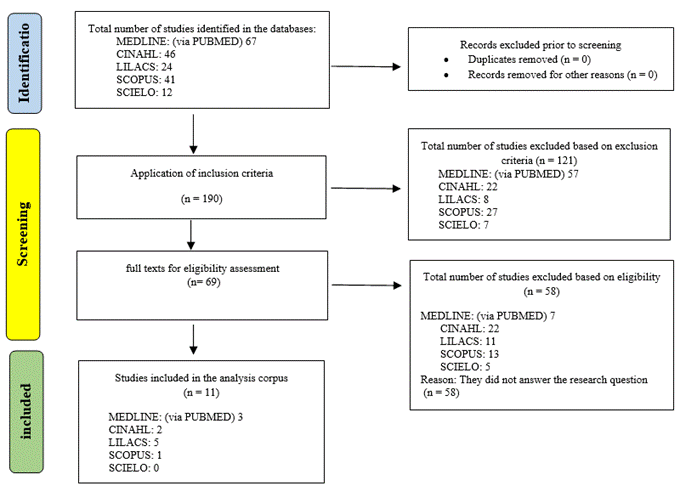
The search strategy resulted in the identification of 190 studies across the selected databases. After applying the inclusion and exclusion criteria, 121 studies were excluded, leaving 69 for full-text review. During the eligibility assessment stage, 58 studies were excluded for failing to address the research question, resulting in a final sample of 11 studies. Figure 1 shows the process of study identification, selection, eligibility assessment, and inclusion.
Figure 1 - Flowchart of the study identification, screening, eligibility, and inclusion process, according to PRISMA 2020.
Source: Created by the authors themselves (2023), adapted (13)
Of the 11 studies included in the analysis corpus, three were identified in MEDLINE (through PubMed), five in LILACS, two in CINAHL, and one in Scopus. No studies from SciELO were included in the final sample. Chart 2 shows the characteristics of the included studies.
Chart 2- Analysis corpus
|
Authors/Year |
Language |
Title |
Objective |
Main results |
LE |
|
Lopes et al., 2020(14) |
Portuguese |
Playful approaches and coping with childhood cancer treatment |
To demonstrate how, in the children’s view, playful approaches contribute to their coping with cancer treatment. |
Children recognize the importance of play during treatment and observe that this activity evokes various feelings, such as happiness and a sense of well-being. In contrast, the pain caused by illness triggers anger. |
6 |
|
Santos; Silva; Cantalice, 2019 (15) |
Portuguese |
Instructional therapeutic toy: preparing child for intravenous chemotherapy |
To compare the behaviors of children during intravenous chemotherapy before and after the use of an instructional therapeutic toy. |
There was a significant reduction in the “withdrawn posture” of children who used the instructional toy. It also helped manage the anxiety and distress caused by intravenous chemotherapy treatment. |
6 |
|
Sposito et al., 2018(16) |
Portuguese |
The best of hospitalization: contributions of playing to cope with chemotherapy |
To understand play as a strategy for coping with chemotherapy treatment in children. |
The children highlighted the importance of play and the relevance of a play area within the hospital environment. |
6 |
|
Morais et al., 2018 (17) |
Portuguese |
Existential experience of children undergoing chemotherapy regarding the importance of playing |
To understand the existential experience of children undergoing chemotherapy regarding the importance of play. |
Children understand the illness and the treatment. Furthermore, play evokes positive feelings and is a way for time to “fly by.” |
6 |
|
Lima; Santos, 2015 (18) |
Portuguese |
Play as a care strategy for children with cancer |
To understand the influence of play on the care process, from the perspective of children with cancer. |
All recreational activities engaged in by children with cancer generate joy, fun, interaction, and a welcome distraction. They also bring benefits to the care process. |
6 |
|
Linder et al., 2021 (19) |
English |
Feasibility and Acceptability of a Game-Based Symptom Reporting App for Children with Cancer: Perspectives of Children and Parents |
To evaluate the feasibility and acceptability of a newly developed game-based app for symptom reporting among school-aged children with cancer. |
Children with cancer and their parents highlight the relevance of the app, which boosts the child's autonomy and fosters creativity. |
6 |
|
Bernier Carney et al., 2021(20) |
English |
Communication of pain by school-age children with cancer using a game-based symptom assessment app: A secondary analysis
|
To evaluate the self-reported pain experiences of school-aged children with cancer participating in a feasibility test of a game-based symptom assessment app. |
Children with cancer are willing to report their pain qualitatively and using narrative descriptions via a mobile app. |
6 |
|
Hamari et al., 2019(21) |
English |
The effect of an active video game intervention on physical activity, motor performance, and fatigue in children with cancer: a randomized controlled trial |
To evaluate the effect of active video games on promoting physical activity and motor performance, and on reducing fatigue in children with cancer. |
There was no significant variation in levels of physical activity, fatigue, or motor performance following the use of active video games. However, the intervention was not carried out according to the guidelines. |
4 |
|
Sposito et al., 2016 (22) |
English |
Puppets as a strategy for communication with Brazilian children with cancer |
This study presents the experience of using puppets as a playful strategy to improve interaction and communication with hospitalized children with cancer, aged seven to 12. |
The use of puppets has demonstrated benefits, such as enabling children to express themselves freely and autonomously, thereby minimizing the hierarchical adult-child dynamic. Furthermore, this tool is well-suited for communicating with hospitalized children; it can enrich clinical practice by encouraging children with cancer to share their experiences while also assisting the healthcare team during assessment and intervention. |
6 |
|
Frygner-Holm et al., 2020 (23) |
English |
Pretend Play as an Intervention for Children With Cancer: A Feasibility Study |
To develop and evaluate the feasibility and acceptability of an adult-facilitated pretend play intervention for children with cancer. |
The results suggest that the children enjoyed the intervention. Furthermore, the findings indicate slight improvements in self-efficacy regarding care-related situations and quality of life. Thus, the intervention is considered safe, feasible, and acceptable, and represents a potential means of increasing participation and independence among children diagnosed with cancer. |
6 |
|
Kurudirek; Arikan, 2020 (24) |
English |
Effects of Therapeutic Clowning on Pain and Anxiety During Intrathecal Chemotherapy in Turkey |
To explore the effect of therapeutic clowning on pain and anxiety during intrathecal chemotherapy. |
Children in the clown group exhibited significantly less pain and anxiety than children in the control group. Thus, clowning is effective in alleviating pain and anxiety in children with cancer. |
6 |
Source: Created by the authors themselves (2023)
The included studies focused on children undergoing chemotherapy, whether hospitalized or receiving outpatient care. Regarding the level of evidence, there was a predominance of studies classified as Level VI (n=10), with only one Level IV study (n=1) identified.
Chart 3 shows and groups the results obtained from the analysis of the included studies based on thematic similarities and content associations.
Chart 3 – Summary of the main findings and playful approaches identified in the included studies
|
MAIN FINDINGS RELATED TO THE PLAY-BASED APPROACHES |
Reduced anxiety (15,24) |
|
|
Reduced suffering (15, 24) |
||
|
Reduced pain (20, 24) |
||
|
Well-being (14-16,18) |
||
|
Distraction (17-19) |
||
|
Fun (14, 18) |
||
|
Improved quality of life (19, 20, 22- 24) |
||
|
PLAY-BASED APPROACHES USED |
Games |
Mobile apps (19, 20) |
|
Videogame (21) |
||
|
Puppet (22) |
||
|
Educational toy (15) |
||
|
Photos (18) |
||
|
Therapeutic clowning (24) |
||
|
Games and play in general (14, 16, 17, 23) |
||
Source: Created by the authors themselves (2023).
DISCUSSION
A childhood cancer diagnosis triggers feelings such as sadness, fear, and anxiety regarding the future. Compounding this are the repercussions of treatment, which involve pain, suffering, insecurity, physical changes, and disruptions to the routines of both the child and their family (6). In this context, play-based approaches stand out as strategies that foster the humanization of care, helping to make the hospitalization experience less traumatic and more welcoming.
The results of this review demonstrated that play-based approaches have positive effects during the hospital treatment of children with cancer. Key findings include reduced anxiety and suffering (15, 24), minimized pain (24), and the promotion of well-being (14–16, 18), moments of distraction (17, 18, 21), and fun (14, 18), as well as improved quality of life (19, 20, 22–24). These results reinforce the potential of play-based strategies to facilitate coping with treatment and contribute to more humanized care.
Concerning the play-based approaches identified, there was the use of games (19–21), puppets (21), instructional toys (15), photographs (18), therapeutic clowning (24), and general play activities (14, 16, 17, 23). This diversity demonstrates that various resources can be incorporated into care, allowing interventions to be tailored to the needs, preferences, and age groups of the children undergoing treatment.
Among these strategies, therapeutic play proved important for explaining and demonstrating procedures, thereby fostering a greater sense of security and calm for both the children and their families. Similarly, interventions led by hospital clowns significantly reduce pain during invasive procedures, corroborating the findings of this review and reinforcing the potential of these strategies to minimize childhood suffering (25). Another aspect identified was the increasing use of digital technologies in the care of children with cancer. Virtual health technologies have gained ground in pediatric care by fostering communication, creativity, and autonomy among children (5). These benefits were also observed in studies evaluating applications designed for reporting pain and other symptoms, demonstrating that such resources can enhance clinical monitoring and strengthen the child's participation in their own care.
In relation to the communication and bond-building, tools such as puppets and pretend play have yielded positive results. In addition to facilitating the expression of feelings and experiences, these strategies strengthen the interaction between the child, the family, and healthcare professionals. Play also enables the professional to better understand the child's reality, contributing to the development of individualized care centered on their needs (26).
This review also highlighted the importance of having appropriate environments for these activities. Hospital playrooms foster moments of leisure, socialization, relaxation, and fun, thereby reducing the emotional impact of hospitalization (27). However, although the benefits of play are widely recognized, challenges, such as heavy staff workloads, personnel shortages, and a scarcity of play resources, still limit the systematic use of therapeutic play in clinical practice (28), indicating that gaps remain regarding its effective implementation in health services (29).
The findings of this review reinforce the importance of incorporating play-based approaches into the care of children with cancer, given their potential to promote positive feelings, such as joy, a sense of security, and well-being, and to help reduce pain, fear, and anxiety associated with the illness, hospitalization, and therapeutic procedures. Consequently, it is necessary to rethink the organization and operation of pediatric health services so that these environments foster accessibility and inclusion, while providing spaces that encourage play during treatment (10).
The limitations of this study concern the restriction of publications to Portuguese, English, and Spanish, as well as the selection of studies indexed in the specific databases searched, which may have limited the identification of other relevant evidence. Furthermore, a predominance of studies classified as Level VI evidence was observed, indicating a need for research with more robust methodological designs on this topic. Regarding implications for practice, this review provides evidence that can support nurses and other healthcare professionals in incorporating play-based strategies during the hospital treatment of children with cancer. Adopting these approaches fosters the humanization of care, strengthens the bond between professionals, children, and families, improves communication, and contributes to care that is more welcoming, participatory, and centered on the child's needs.
CONCLUSION
This study identified the scientific literature regarding the use of play-based approaches in the hospital treatment of children with cancer, highlighting that these strategies contribute to the humanization of care and facilitate coping with the disease and its treatment. Evidence demonstrated benefits such as reduced pain, anxiety, and fear, alongside the promotion of well-being, enjoyment, and autonomy, as well as the strengthening of bonds between the child, the family, and healthcare professionals.
The study also identified the main play-based approaches used in the hospital setting, notably mobile apps, games, video games, puppets, instructional toys, photographs, therapeutic clowning, and general play activities. Recommendations include the development and evaluation of new play-based strategies for pediatric oncology care, as well as studies with more robust methodological designs capable of expanding the scientific evidence base and supporting the systematic incorporation of these practices into clinical care.
REFERENCES
1. Santos M de O, Lima FC da S de, Martins LFL, Oliveira JFP, Almeida LM de, Cancela M de C. Estimativa de Incidência de Câncer no Brasil, 2023-2025. Rev. Bras. Cancerol. [Internet]. 2023 [citado 3 Setembro de 2023];69(1):e-213700.
2. Filbin M, Monje M. Developmental origins and emerging therapeutic opportunities for childhood cancer. Nat Med. [Internet]. 2019. [citado 12 Julho de 2025];25(3):367-376. doi: https://doi.org/10.1038/s41591-019-0383-9.
3. Feliciano SVM, Santos M de O, Pombo-de-Oliveira MS. Incidência e Mortalidade por Câncer entre Crianças e Adolescentes: uma Revisão Narrativa. Rev. Bras. Cancerol. [Internet]. 2018 [citado 14 de janeiro de 2026];64(3):389-96. doi: https://doi.org/10.32635/2176-9745.RBC.2018v64n3.45.
4. Mozzilli SL, Salvetti M de G, Andrade VR e, Oliveira LR de. Criação e desenvolvimento de aplicativo para crianças em tratamento oncológico: interdisciplinaridade e cocriação. bis [Internet]. 2020 [citado 12 Julho de 2022];21(1):97-103. doi: https://doi.org/10.52753/bis.v21i1.36732.
5. Silva GH; Frizzo HCF. O uso de tecnologias virtuais no cuidado à criança e ao adolescente com câncer: revisão de escopo. R. Saúd. Digi. Tec. Edu. 2019 [Internet] 2019 [citado 15 Julho de 2022]; 4(1): 43–59. Disponível em: <https://repositorio.ufc.br/handle/riufc/45525>.
6. Pereira ES, Pereira ES, Costa GOP, Ribeiro AMN, Santos AM, Nunes MIS, Oliveira CS, Sousa JCR, Costa IS, Tinel OMR, Leite YMR, Oliveira NVD, Nery EL, Moreiras FS. Adverse effects of chemotherapy drugs - a focus for the nursing team. RSD [Internet]. 2020 [citado 12 Julho 2022];9(12):e25991211009. doi: https://doi.org/10.33448/rsd-v9i12.11009.
7. Linder LA, Hooke MC. Symptoms in Children Receiving Treatment for Cancer-Part II: Pain, Sadness, and Symptom Clusters. J Pediatr Oncol Nurs. [Internet]. 2019 [citado 10 Julho de 2024];36(4):262-279. doi: https://doi.org/10.1177/1043454219849578.
8. Pimentel M, Mesquita C, Lima G. Piskatoomba in the hospital: playful clothing and minimization of stress for children with cancerv. DATJournal [Internet]. 2021 [citado 2026 Janeiro 14];6(2):160-77. doi: https://doi.org/10.29147/dat.v6i2.403.
9. Souza LS, Figueirêdo MNL, Fú HS, Oliveira KBS, Brasileiro LT, Nunes RT, Silva PHB, Melo MST. O Lúdico no Processo de Hospitalização das Crianças com Câncer. Licere (Online) [Internet] 2022 [citado 22 Julho de 2025];25(1): 171-199. doi: https://doi.org/10.35699/2447-6218.2022.39075.
10. Pereira RT, Rolim CLA. A manifestação da ludicidade na hospitalização infantil: do ambiente às práticas ludo-terapêuticas. Rev. Educ. Espec. [Internet]. 2022 [citado 10 Julho de 2022];35:e7/1-25. doi: https://doi.org/10.5902/1984686X66968.
11. Mendes KDS, Silveira RC de CP, Galvão CM. Revisão integrativa: método de pesquisa para a incorporação de evidências na saúde e na enfermagem. Texto contexto - enferm [Internet]. 2008 [citado 14 Julhi de 2022];17(4):758–64. doi: https://doi.org/10.1590/S0104-07072008000400018.
12. Galvão CM. Níveis de evidência. Acta paul enferm [Internet]. 2006 [citado 15 Julho de 2022];19(2):5–. doi: https://doi.org/10.1590/S0103-21002006000200001
13. Page MJ, McKenzie JE, Bossuyt PM, Boutron I, Hoffmann TC, Mulrow CD, et al. The PRISMA 2020 statement: an updated guideline for reporting systematic reviews. BMJ. 2021;372:n71. doi: https://doi.org/10.1136/bmj.n71.
14. Lopes NCB, Viana ACG, Félix ZC, Santana J dos S, Lima PT de, Cabral ALM. Playful approaches and coping with childhood cancer treatment. Rev. enferm. UERJ [Internet]. 2020 [citado 14 Janeiro de 2026];28:e53040. doi: https://doi.org/10.12957/reuerj.2020.53040
15. Santos VSS, da Silva FL, Cantalice ASC. Brinquedo terapêutico instrucional: preparando a criança para a quimioterapia endovenosa. SALUSVITA [Internet] 2019 [citado 22 Junho 2022]; 38(4): 987-1000, 2019. Disponível em: <https://pesquisa.bvsalud.org/portal/resource/pt/biblio-1117694>.
16. Sposito AMP, Garcia-Schinzari NR, Mitre RMA, Pfeifer LI, Lima RAG, Nascimento LC. O melhor da hospitalização: contribuições do brincar para o enfrentamento da quimioterapia. Avances en Enfermería [Internet]. 2018 [citado 12 Janeiro de 2026];36(3): 328-337, 2018. doi: https://doi.org/10.15446/av.enferm.v36n3.61319.
17. Morais GSN, Costa SFG, França JRS, Duarte MCS, Lopes MEL, Batista PSS. Experiência existencial de crianças em tratamento quimioterápico sobre a importância do brincar. Rev Rene [Internet]. 2018 [citado 12 Julho 2022];19(e3359): 1-8. doi: https://doi.org/10.15253/2175-6783.2018193359.
18. Lima KYN de, Santos VEP. Play as a care strategy for children with cancer. Rev Gaúcha Enferm [Internet]. 2015 [citado 10 Julho de 2022];36(2):76–81. doi: https://doi.org/10.1590/1983-1447.2015.02.51514
19. Linder LA, Newman AR, Stegenga K, Chiu YS, Wawrzynski SE, Kramer H, Weir C, Narus S, Altizer R. Feasibility and acceptability of a game-based symptom-reporting app for children with cancer: perspectives of children and parents. Support Care Cancer. . [Internet]. 2021[citado 14 Julho de 2025];29(1):301-310. doi: https://doi.org/10.1007/s00520-020-05495-w.
20. Bernier Carney KM, Jung SH, Iacob E, Lewis M, Linder LA. Communication of pain by school-age children with cancer using a game-based symptom assessment app: A secondary analysis. Eur J Oncol Nurs. [Internet]. 2021[citado 9 Jul 2025];52:101949. doi: https://doi.org/10.1016/j.ejon.2021.101949.
21. Hamari L, Järvelä LS, Lähteenmäki PM, Arola M, Axelin A, Vahlberg T, Salanterä S. The effect of an active video game intervention on physical activity, motor performance, and fatigue in children with cancer: a randomized controlled trial. BMC Res Notes [Internet]. 2019 [citado 12 Julho de 2022];12(1):784. doi: https://doi.org/10.1186/s13104-019-4821-z.
22. Sposito AM, de Montigny F, Sparapani Vde C, Lima RA, Silva-Rodrigues FM, Pfeifer LI, Nascimento LC. Puppets as a strategy for communication with Brazilian children with cancer. Nurs Health Sci. [Internet]. 2016 [citado 12 Julho de 2022]; 18(1):30-7. doi: https://doi.org/10.1111/nhs.12222.
23. Frygner-Holm S, Russ S, Quitmann J, Ring L, Zyga O, Hansson M, Ljungman G, Höglund AT. Pretend Play as an Intervention for Children With Cancer: A Feasibility Study. J Pediatr Oncol Nurs. [Internet]. 2020 [citado 7 Julho de 2022]; 37(1):65-75. doi: https://doi.org/10.1177/1043454219874695
24. Kurudirek F, Arıkan D. Effects of Therapeutic Clowning on Pain and Anxiety During Intrathecal Chemotherapy in Turkey. J Pediatr Nurs. [Internet]. 2020 [citado 10 Julho de 2025];53:e6-e13. doi: https://doi.org/10.1016/j.pedn.2020.01.015.
25. Xavier VE, Antoneli AJMF, Ferreira RM, Martins VA, Costa ICS da, Silveira MMM da, Moura LR. Risoterapia no câncer pediátrico: a analgesia eficaz para quando a vida se faz frágil / Laughtherapy in pediatric’s cancer: the effective analgesia when life becomes fragile. Braz. J. Develop. [Internet]. 2019 Nov. 4 [cited 2026 Jan. 14];5(11):22945-57. doi: https://doi.org/10.34117/bjdv5n11-025
26. Di Riso D, Cambrisi E, Bertini S, Miscioscia M. Associations between Pretend Play, Psychological Functioning and Coping Strategies in Pediatric Chronic Diseases: A Cross-Illness Study. Int J Environ Res Public Health. [Internet]. 2020 [citado 8 de Julho 2022];17(12):4364. doi: https://doi.org/10.3390/ijerph17124364.
27. Oliveira JJAB, Matos OS. Brinquedoteca hospitalar: importância para o brincar da criança hospitalizada com câncer. R. Bibliomar [Internet].2019 [citado 12 Julho de 2022]; 18(2):35-49. Disponível em: https://periodicoseletronicos.ufma.br/index.php/bibliomar/article/view/12679/7243
28. Ciuffo LL, Souza TV de, Freitas TM de, Moraes JRMM de, Santos KCO dos, Santos R de OJFL dos. The use of toys by nursing as a therapeutic resource in the care of hospitalized children. Rev Bras Enferm [Internet]. 2023 [citado 7 Jul 2022];76(2):e20220433. doi: https://doi.org/10.1590/0034-7167-2022-0433
29. Miranda CB, Maia EBS, Almeida F de A. Modelo de implementação sistemática do brinquedo terapêutico em unidades pediátricas hospitalares. Esc Anna Nery [Internet]. 2022 [citado 12 Julho 2022];26:e20220136. doi: https://doi.org/10.1590/2177-9465-EAN-2022-0136pt
Funding and Acknowledgments:
CAPES/COFEN Agreement.
Conflict of interest statement:
None to declare.
Data availability statement
No datasets were generated in this study. The information presented is described in the body of the article. Authorship criteria (author contributions)
Authorship designation must be based on ICMJE guidelines, which define an author as someone who: 1. contributes substantially to the conception and/or planning of the study; 2. to the acquisition, analysis, and/or interpretation of data; 3. as well as to the drafting and/or critical revision and final approval of the published version.
Paola Piovenzano de Soliz: 1,2,3
Luiz Fernando Rodrigues Junior: 1,2,3
Adriana Dall’Asta Pereira: 2,3
Andressa da Silveira: 2,3
Josi Barreto Nunes: 2,3
Keity Laís Siepmann Soccol: 1,2,3
Scientific Editor: Ítalo Arão Pereira Ribeiro. ORCID: https://orcid.org/0000-0003-0778-1447
Rev Enferm Atual In Derme 2026;100(3): e026091